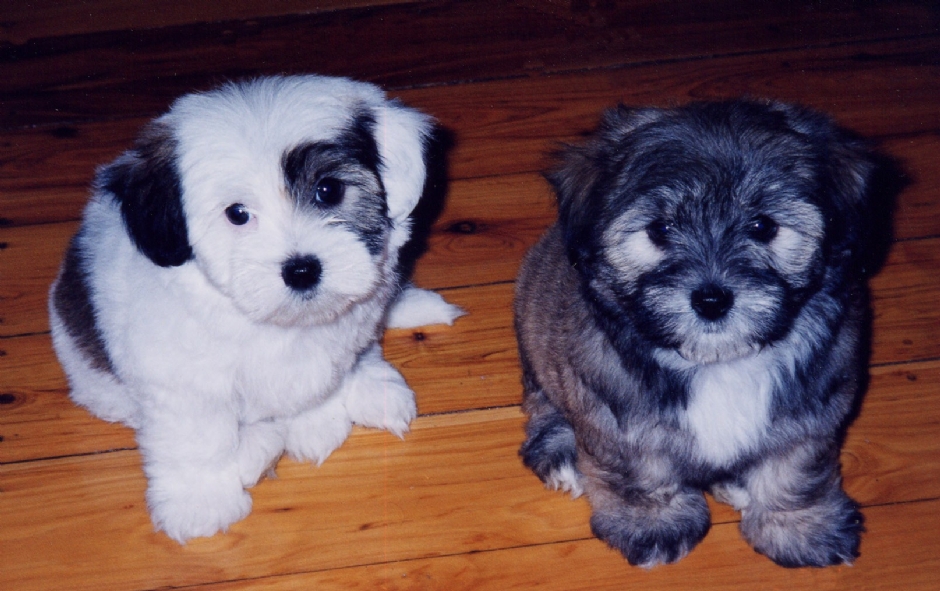
Comparison of a dog’s age with a human’s age
It is often said that one year in a dog’s life corresponds to seven years in a human’s life. In reality, this is not the case, as a one-year-old dog is not at all in the same stage of development as a seven-year-old child, and the correspondence depends fundamentally on the period of life in question and the size of the breed. Compared to humans, and in relation to lifespan, ‘youth’ and “childhood” are shorter in dogs, while ‘maturity’ is prolonged.
Youth passes more quickly than maturity and old age, the latter being prolonged thanks to the care provided by humans. Old age, although shorter in absolute terms, tends to represent a larger part of life in large dogs than in small ones. The longer the growth stage, the larger the breed, as can be seen in the following graph.
Depending on the type of breed, smaller breeds mature earlier than larger ones, which means that they reach adulthood earlier, with ‘childhood’ and youth being comparatively shorter.
| Small dog | Human | |
| Years | Factor | Years |
| 1 | x20 | 20 |
| 2 | x14 | 28 |
| 5 | x7 | 35 |
| 10 | x5 | 50 |
| 15 | x5 | 75 |
| Medium dog | Human | |
| Years | Factor | Years |
| 1 | x20 | 20 |
| 2 | x14 | 28 |
| 5 | x7 | 35 |
| 10 | x5 | 50 |
| 15 | x5 |
75 |
| Large dog | Human | |
| Years | Factor | Years |
| 1 | x20 | 20 |
| 2 | x14 | 28 |
| 5 | x7 | 35 |
| 10 | x5 | 50 |
| 15 | x5 | 75 |
The percentage represented by each stage of life in relation to its total duration may be as follows:
| Small Pequeño | Medium Dog | Large Dog | |
| childhood | 6% | 6,5% | 7% |
| Youth | 6 | 6,5 | 7 |
| Maturity | 63 | 60 | 53 |
| Old Age | 25 | 27 | 30 |
Small breed dogs live longer than medium breed dogs and especially large and giant breed dogs, as they reach maturity and old age later. The average lifespan of a small dog can be 15 years, that of a medium breed dog 14 years, that of a large dog 12 years, and that of a giant breed dog 11 years.